
PRODUCTS
CITs
Is A Collective Investment Trust Right For Your Plan?
Harbor’s collective investment trusts (CITs) are pooled investment vehicles available to eligible retirement plans.
Weighing Potential Cost Benefits & Other Considerations
Among its investment options, employer‑sponsored retirement plans may offer CITs. CITs offer similar benefits to mutual funds but with potential cost savings that can help make participants’ retirement assets work even harder.
A Practical Way to Help Reduce Plan CostsCollective investment trusts (CITs) have become an increasingly popular way for defined contribution (DC) plans to help manage costs. These pooled investment vehicles offer similar benefits to mutual funds—professional management, easy accessibility, streamlined recordkeeping and daily valuation and liquidity—at generally lower fee structures, which can translate into sizable savings for participants. Because of this cost efficiency and pricing flexibility, CIT adoption continues to grow, with total assets more than doubling since 2011. What follows is an educational look at CITs and how they work.
An Increasingly Popular Plan Choice
CIT assets have more than doubled over the past five years
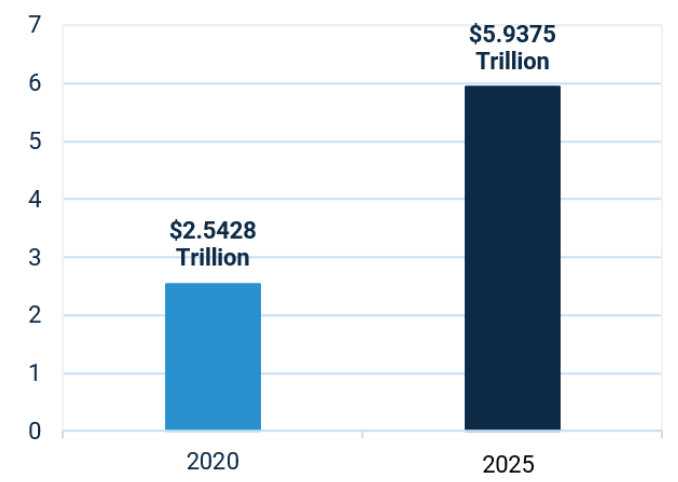
Source: Morningstar. As of 6/30/2025.
CIT Basics
How are CITs structured?Similar to a mutual fund, a CIT is a pooled investment vehicle that is collectively managed to seek a specific investment objective. The structure can be used to invest in a broad range of assets and investment styles, as outlined in the strategy’s governing documents. Unlike mutual funds, however, which are usually offered by asset management companies and can be sold to a broad range of institutional and individual investors, CITs are sponsored and maintained by banks and trust companies for the exclusive use in certain qualified retirement plans. As a result, CITs are overseen by the Office of the Comptroller of Currency and state banking regulations, as well as the IRS and the DOL, rather than the U.S. Securities and Exchange Commission (SEC) and the Investment Company Act of 1940, like mutual funds.
Who can invest?✔ Defined benefit
✔ Profit-sharing
✔ Stock bonus
✔ 401(a) and 457(b) plans
✔ Some insurance company separate accounts.
✗ IRAs
✗ Most Keoghs
✗ Insurance-company general accounts
✗ Private endowment and foundation plans
Since CITs are not sold directly to the general public, they can benefit from notable cost advantages in several key areas compared to mutual funds. First, while CITs are heavily regulated, their structure makes them exempt from SEC registration and ongoing SEC requirements, which can dramatically lower legal, compliance and board-related costs. Second, they consist of retirement plan assets. These tend to be “stickier” compared to broader retail assets, which means CITs typically experience lower trading volumes and cash flow management activity that can translate into lower trading costs. Third, because they are sold only to institutional retirement plans, advertising and distribution expenses also tend to be significantly less.
Common CIT Misperceptions
Plan sponsors may not be as familiar with CITs as they are mutual funds. Below are several common CIT misperceptions, along with the realities.
Comparing CITs & Mutual Funds
While CITs are similar to mutual funds, there are several key differences.
At-a-Glance ComparisonStill hesitant to transition retirement assets into Collective Investment Trusts (CITs), despite their compelling advantages? At Harbor Capital, we make it easy. Our expert team and streamlined onboarding process ensure a smooth, efficient, and confident move to CITs—so you can focus on delivering value to your clients.
Let’s Make CITs Work for You
Harbor’s experienced team is ready to help you unlock the potential of CITs and enhance your retirement plan offering. Contact us today to learn more:
Investing in a Harbor CIT & Eligibility
Investments in the CIT are NOT bank deposits, are NOT guaranteed by Harbor Trust Company or any of its agents, are NOT insured by the Federal Deposit Insurance Corporation (“FDIC”) or any other agency of the U.S. government, and are subject to investment risks, including loss of principal. The Harbor CIT is not registered under the Investment Company Act and the Units are not registered under the Securities Act in each case in reliance on exemptions under these Acts for interests in a collective trust fund maintained by a bank for certain types of employee benefit trusts. Accordingly, information that would otherwise be needed if registration were required are not necessary.
Fixed income investments are affected by interest rate changes and the creditworthiness of the issues held by the CIT. As interest rates rise, the values of fixed income securities held by the CIT are likely to decrease and reduce the value of the CIT's portfolio.
International investing involves risks, including risks related to foreign currency, limited liquidity, less government regulation and the possibility of substantial volatility due to adverse political, economic or other developments. These risks often are heightened for investments in emerging/developing markets or in concentrations of single countries.
A Collective Investment Trust (“CIT”) is a pooled investment vehicle designed for exclusive use in certain qualified retirement plans, such as defined contribution, defined benefit, profit‑sharing, 401(a) and 457(b) plans. CIT expenses may be lower due to reduced compliance, operational, and marketing costs. Plan sponsors seeking mutual fund‑like characteristics with potentially lower expenses may consider a CIT.
Legal Notices & Disclosures
Please note that this piece does not comply with all of the disclosure requirements for an ERISA “section 404(c) plan,” as described in the Department of Labor regulations under section 404(c), nor does it contain all of the disclosure required by Rule 404a‑5. Plan sponsors intending to comply with those regulations will need to provide the Plan participants with additional information. The information provided in this piece is provided for general information only and should not be construed as investment advice or a recommendation. Participants should consult their financial adviser to determine their investment risk and tolerance and evaluate if the CIT is suitable for their retirement needs.
Important Information
The Harbor CITs are not mutual funds. Participation in the CIT is limited to Eligible Trusts that are accepted by Harbor Trust Company, as the trustee, as Participating Trusts. These eligibility requirements, along with other defined terms, are more fully described in the Declaration of Trust.
There is no guarantee that the investment objective of the CIT will be achieved. Stock markets are volatile and equity values can decline significantly in response to adverse issuer, political, regulatory, market and economic conditions.
Not FDIC Insured. No Bank Guarantee. May Lose Value.
Harbor Trust Company, Inc. (“Harbor Trust Company”) has established the Harbor Collective Investment Trust (the "Trust") pursuant to a Declaration of Trust and collective investment funds of the Trust (the “CITs”) pursuant to a Fund Declaration. Harbor Trust Company serves as trustee and is responsible for maintaining and managing the CITs. Harbor Capital Advisors, Inc. (“Harbor Capital”) serves as investment adviser to the CITs. The CITs are distributed by Harbor Funds Distributors, Inc. ("Harbor Funds Distributors"). Harbor Funds Distributors, Harbor Capital, and Harbor Trust Company are affiliates.
For Plan Administrators, Plan Sponsors, and Authorized Advisors Only.