


Five Key Points For Potential IPO Investors
We believe SpaceX is being valued like a mega-cap technology company, not a traditional aerospace company. The IPO is being priced at $135 per share, raising ~$75 billion and implying an equity valuation around $1.77 trillion. Against FY25 revenue of $18.67 billion, that is ~95x trailing sales. The bull case argues that the multiple looks closer to ~40x if recent compute contracts and a possible Cursor transaction are included in the forward revenue base, while bears note SpaceX would still have far less revenue than the average $1 trillion+ market-cap peer. Cerebras is a recent high-growth AI comparison at 50x+ sales, but SpaceX’s IPO valuation still requires a very long runway for execution.
The company is now a three‑part story: Starlink, launch infrastructure, and AI compute. Starlink/connectivity is the current commercial engine, accounting for about 60% of fiscal year 2025 revenue, while the Space segment contributes launch capability and the potential around Starship full‑rocket reusability. The newest part of the story is AI infrastructure which includes xAI/Grok, Colossus data centers, third‑party compute sales, and the longer‑term idea of orbital data centers.
Starlink gives SpaceX a real operating business, but AI compute has appeared to change the narrative of the company/stock. Starlink’s scale, subscriber growth, airline partnerships, and low‑earth‑orbit network reflects the company's proven profit center right now. However, the recent Anthropic and Google compute deals have shifted investor focus toward SpaceX as a potential “neo‑cloud” provider for AI companies that need access to Nvidia GPU capacity. SpaceX’s June 5 SEC filing says Google agreed to pay $920 million per month from October 2026 through June 2029 for access to roughly 110,000 Nvidia GPUs and related infrastructure.
We believe profitability remains a central question. Fiscal year 2025 revenue grew 33%, but the company still posted a $4.94 billion loss and maintains heavy capex needs. AI consumed a major share of capital spending which much of the IPO proceeds will fund. In short: we believe the story requires execution and scale; the present profit center does not appear sufficient to fund the company's major growth initiatives in launch infrastructure and AI compute.
1. The bull case for SpaceX’s stock post IPO
The bull case appears to be that SpaceX is one of the few private companies with the technical capability, brand power (in large part due to Musk), vertical integration, and capital markets access to redefine multiple industries at once. The company has already achieved this in launch, where Falcon 9 made partially reusable rockets commercially viable, and in satellite broadband where Starlink is a scaled consumer and enterprise business.
The most attractive bull case is that SpaceX is building infrastructure for supply constrained markets. Launch capacity is scarce. Global broadband coverage in remote regions is scarce. AI compute is scarce. Power and land for data centers are becoming scarcer. SpaceX’s value proposition is that it can use its competitive advantage in cost‑effective launch, satellite manufacturing, and XAI data center capacity to attack those bottlenecks at scale.
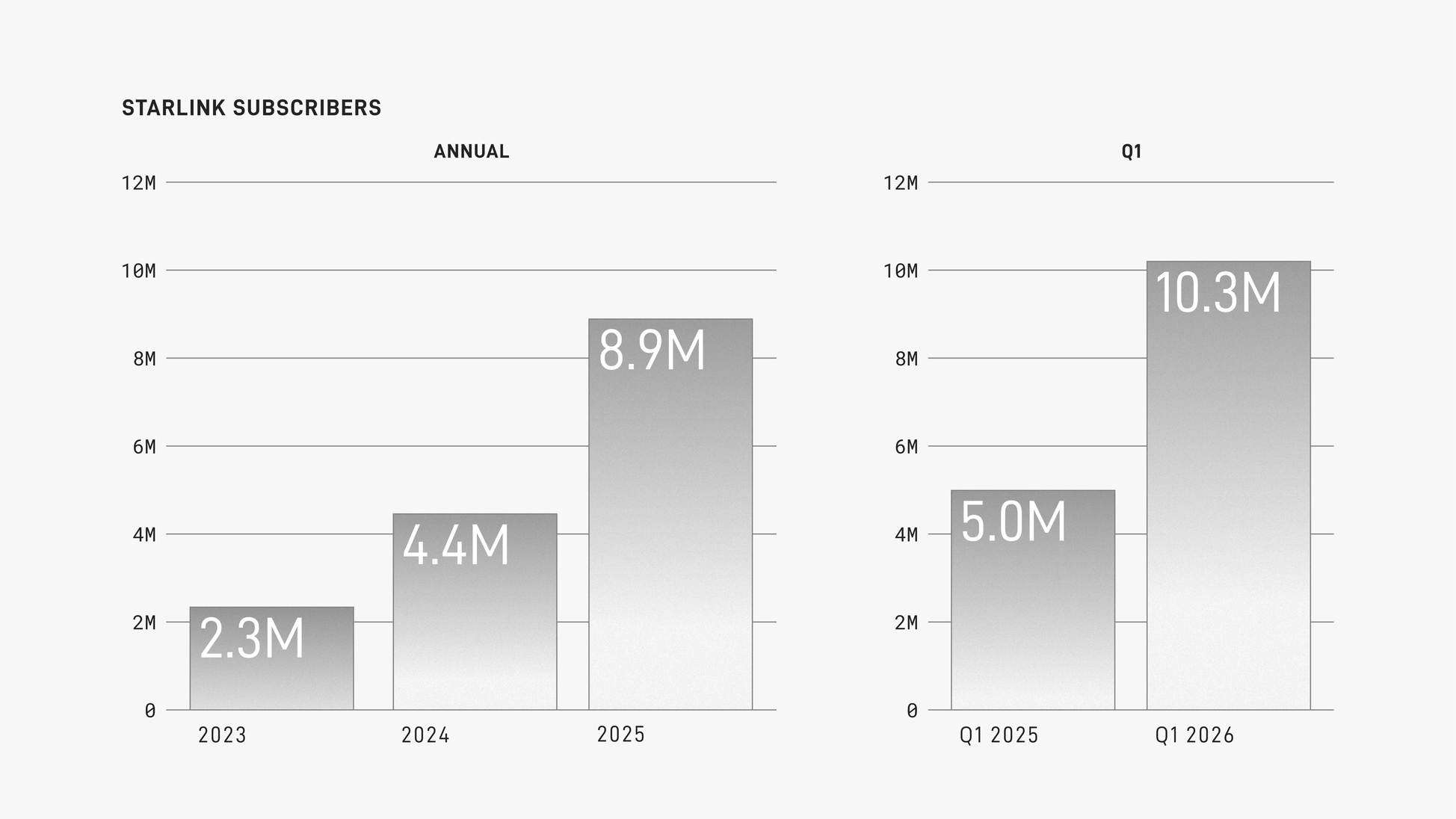
Starlink is the foundation of the company's current revenue base. It has more visible demand than the more speculative space‑AI initiatives, and the airline market is becoming a proof point. United previously signed a deal to add Starlink to more than 1,000 aircraft, and American Airlines recently announced plans to install Starlink on more than 500 aircraft beginning in Q127. These agreements suggest Starlink may be moving from a premium feature in the aircraft industry to an expected part of the travel experience.
Source: SpaceX’s Form S-1 filing on SEC EDGAR, 2026
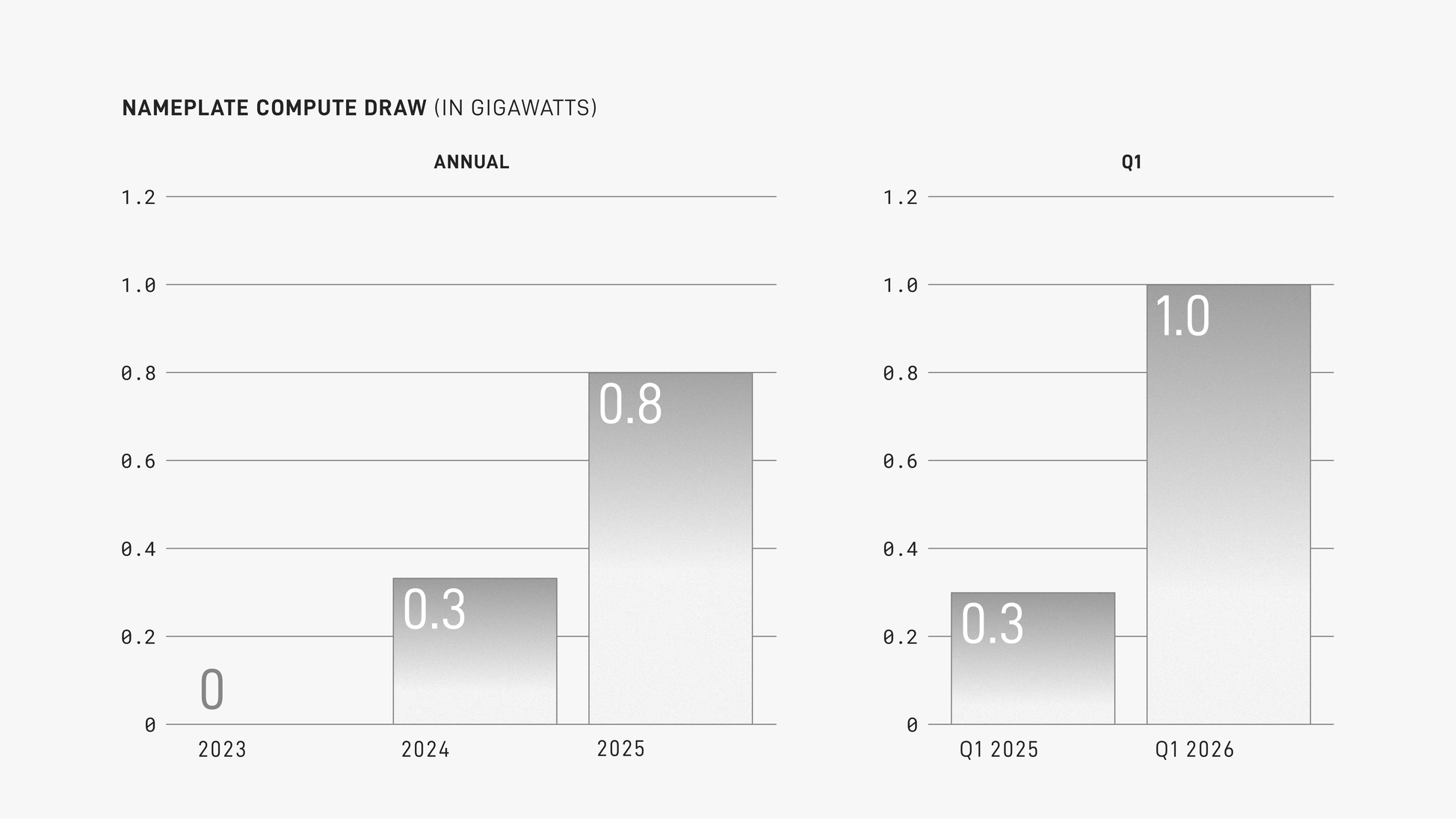
The next driver of the bull case is the recently added AI compute business. The Anthropic and Google agreements provide an immediate way to monetize costly GPU infrastructure. The Anthropic arrangement is described by SpaceX as generating $1.25 billion per month in revenue through May 2029, while the Google agreement adds another $920 million per month. If these contracts remain in place, they meaningfully increase the revenue run rate and quickly reduce the elevated IPO price to Trailing Twelve Months (TTM) sales multiple.
Source: SpaceX’s Form S-1 filing on SEC EDGAR, 2026
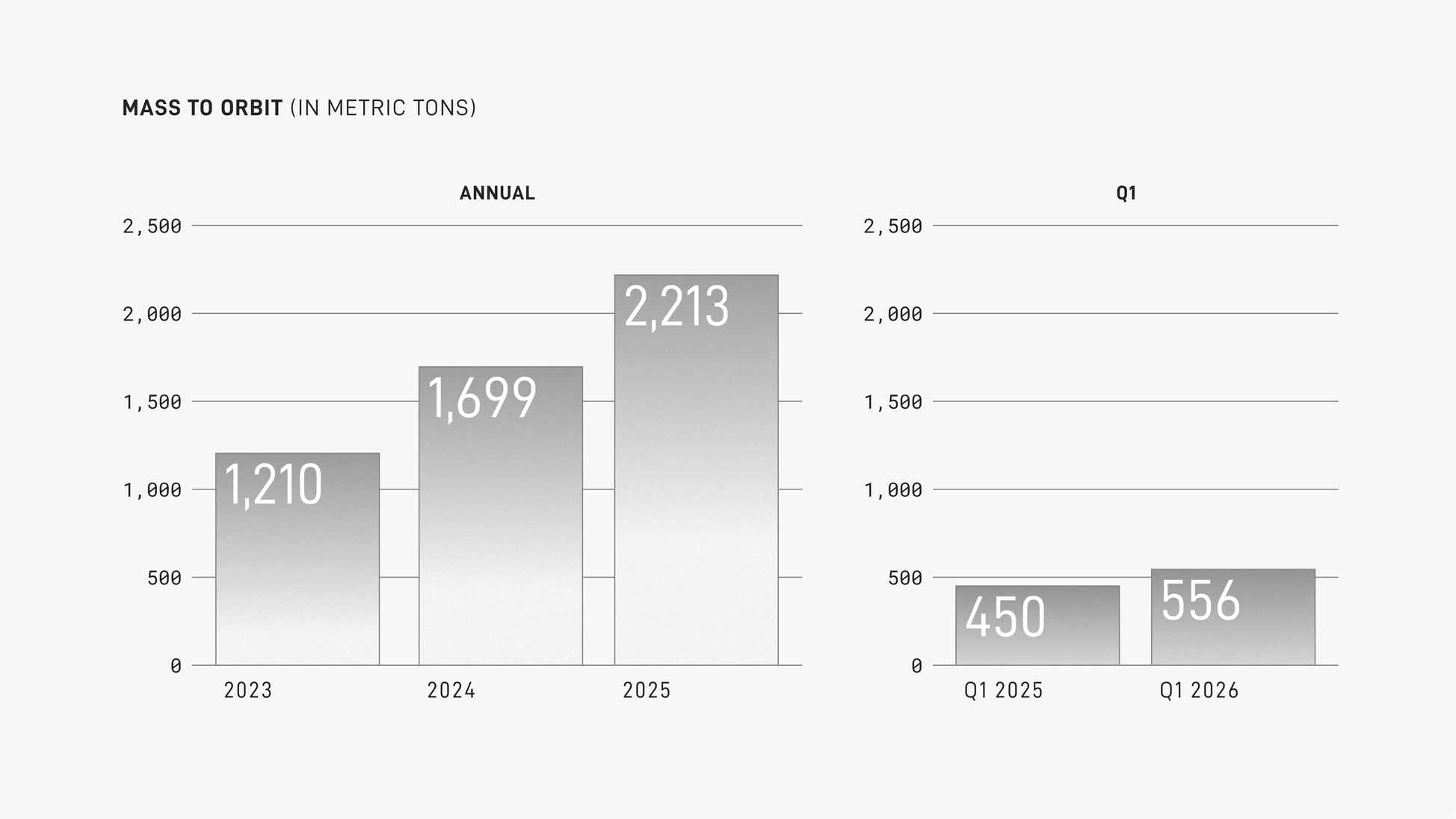
The third driver of the bull case is Starship 3 which could lower the cost of deploying satellites, defense systems, commercial payloads, and eventually orbital data centers. Starship is SpaceX's next generation rocket system that is designed to be fully reusable, unlike Falcon 9 which is only partially reusable. This could be critical because launch cost is the primary constraint on every space‑based business. This is where the long‑term upside becomes much larger, though also more speculative. Google’s Project Suncatcher research shows that major technology companies are taking space‑based AI infrastructure seriously, with research focused on solar‑powered satellite clusters carrying TPUs and connected by optical links.
Source: SpaceX’s Form S-1 filing on SEC EDGAR, 2026
2. The Bear Case
SpaceX may deserve a premium valuation if investors believe it could turn its leadership in launch into broader commercial success in infrastructure across AI compute and space‑based services. The most upside comes from the possibility that SpaceX becomes a core infrastructure layer for the AI and space economy. The bear case begins with valuation. At ~95x trailing sales, SpaceX is being valued on speculation that unproven technology (Starship full rocket reusability and orbital data centers are unproven after all) can scale profitably and in a reasonable time frame. Starlink is a real business right now, but the company overall is still operating at a loss. AI compute may boost revenue, but it is also capital intensive and highly competitive against other mega‑cap tech companies including Amazon, Google, Microsoft, among others.
The risk appears to be that investors give SpaceX too much credit for several future businesses before they are proven. Starlink’s consumer broadband market is large, but in dense markets, fiber and other terrestrial broadband services remain strong competitors. Starlink’s strongest position is likely in rural, maritime, aviation, defense, disaster recovery, and remote enterprise use cases. That can still be a very valuable business, but it does not justify the full IPO valuation on its own.
The AI compute contracts also require some skepticism. They certainly boost revenues and make the valuation more acceptable, but they probably do not deserve the same valuation multiple as recurring software revenue (at least, the multiple software revenue used to get!). These are large infrastructure leases, and the terms include flexibility for the customer. For example, SpaceX’s Google agreement can be terminated by either party after December 31, 2026 with 90 days’ notice.
There is also some uncertainty around the Anthropic deal’s durability. SpaceX materials describe payments through May 2029, but subsequent reporting noted Musk characterized the arrangement as shorter‑term and cancellable. While these recent contracts are certainly supportive of the AI compute business, it's less clear what kind of a multiple these contracts should get.
Governance is another concern. Musk’s super‑majority control (Musk controls 85% of the company's votes) may be part of the attraction for some retail investors, but it also limits minority shareholder influence. The SpaceX S‑1 also refers to SpaceX as a controlled company with $20 billion in obligations to entities affiliated with Elon Musk.
The bear case is not that SpaceX is a bad company with a weak business model. The moat is large and management has proven their ability to allocate capital and develop technical expertise. The issue is more that the IPO may already price in a near‑perfect outcome across Starship, sustained Starlink growth, durable AI compute demand, orbital data centers, and continued investor willingness to fund aggressive capital intensity.
3. Overview of SpaceX’s businesses
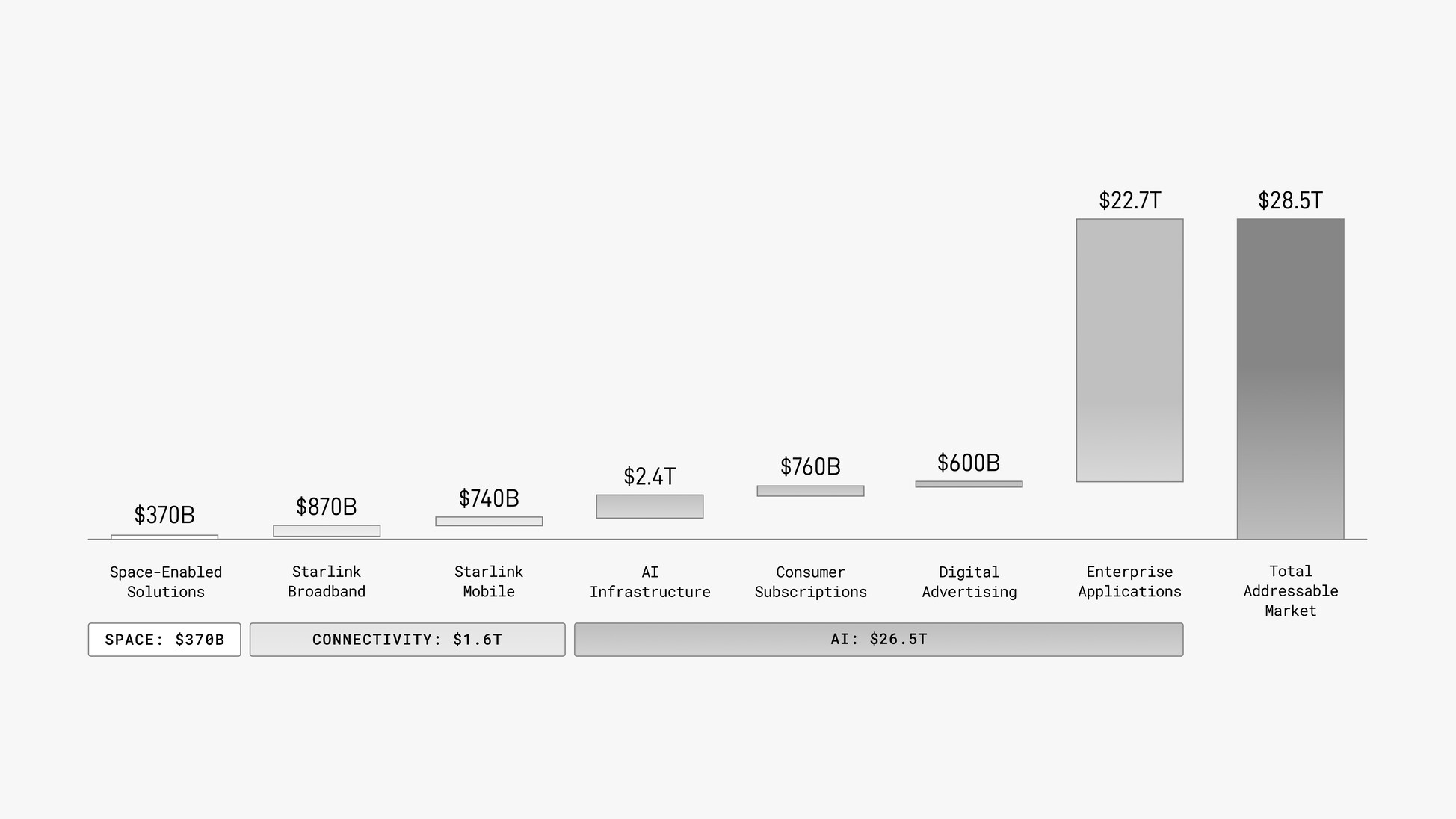
SpaceX competes in four markets: launch, satellite connectivity, AI infrastructure, and future orbital data centers.
In launch, SpaceX is the clear industry leader. Its advantage comes from rocket reusability and vertical integration. Competitors include Blue Origin, Rocket Lab, government‑backed launch providers, and national space agencies.
In satellite connectivity, Starlink is competing with both satellite and terrestrial providers. The best markets are those where terrestrial networks are weak, expensive, or unavailable. That includes rural areas, ships, aircraft, military users, emergency response, remote industrial operations, and developing markets. The challenge is that broadband pricing can decline over time, particularly in lower‑income geographies, which may pressure average revenue per user.
In AI infrastructure, SpaceX is moving into a market currently dominated by hyperscalers, specialized cloud providers, and data center operators. The key issue is not whether demand exists as it clearly does. The IEA projects global electricity demand from data centers to more than double by 2030, with AI as the main driver. That backdrop supports the idea that any large‑scale compute provider with available GPU capacity can monetize it.
In orbital data centers, the opportunity is exciting, cinematic, but also further out in the future. The logic is that space could eventually help solve land, power, cooling, and permitting bottlenecks on Earth. The problem is that orbital compute still faces difficult economics, launch constraints, radiation risk, limited satellite life, and reliability questions.
SpaceX's Estimated TAM by Segment
Source: SpaceX’s Form S-1 filing on SEC EDGAR
4. Latest Business Updates
The biggest update is the Google compute agreement. SpaceX disclosed that Google will pay $920 million per month from October 2026 through June 2029 for access to approximately 110,000 Nvidia GPUs and supporting infrastructure. Google has described the arrangement as bridge capacity for Gemini Enterprise demand, which suggests the deal is driven by near‑term AI compute shortages rather than a shift to an outsourcing model.
The Anthropic compute agreement is even larger on a monthly basis. The offering materials describe access to about 325,000 Nvidia GPUs across Colossus and Colossus II, with payments of $1.25 billion per month after a ramp period.
SpaceX has an option to acquire Cursor for $60 billion in stock, potentially adding several billion dollars of software revenue and bringing AI coding workflow data into the broader company. Strategically, this could help SpaceX move beyond renting GPUs and toward owning higher‑margin AI applications.
American Airlines plans to install Starlink on more than 500 aircraft starting in early 2027, following United’s prior fleetwide Starlink commitment. This supports the view that in‑flight connectivity could become one of Starlink’s most attractive enterprise markets.
5. Key Takeaways
SpaceX has several shots on goal, but its recent pivot to provide AI compute capacity augments near‑term revenue generation and makes the valuation less egregious. However, the real long‑term opportunity comes with Starship's full reusability, revolutionizing the cost economics for space flight and expanding the market for deploying satellites, defense systems, commercial payloads, and eventually orbital data centers.
The opportunity SpaceX is vying for is substantial, but so is the amount already embedded in the valuation. The central question is not whether SpaceX is an exceptional company with an exceptional leader in Elon Musk; it is how much of the next decade’s execution is already priced into the stock on day one. However, I think it's important to note that the graveyard of Wall Street is full of former Elon Musk bears.

Spenser Lerner, CFA®
Head of Multi-Asset Solutions Team
Spenser Lerner is the head of the Multi Asset Solutions Team at Harbor Capital Advisors, Inc. Prior to joining Harbor, Spenser led a Multi Asset Quantitative Research Team in JPMorgan’s managed solutions group. Prior to that role, Spenser led fundamental sector coverage in JPMorgan Asset Management for real estate and energy sectors contributing to both fundamental and research‑based strategies that included long only, long/short, market neutral and options overlaid for U.S. equities. In addition to fundamental equity research, Spenser was responsible for portfolio management, portfolio construction and quantitative investment strategy. Spenser received a B.S. in Business Administration from Monmouth University and is a CFA® charterholder.
For more information on what we think and what it may mean for you, please access the Current or the investment professionals who bring you Current insights at strategicpartnerships@harborcapital.com
Important Information
The views expressed herein may not be reflective of current opinions, are subject to change without prior notice, and should not be considered investment advice. These views are subject to change at any time based upon market or other conditions These views may not be relied upon as investment advice and, because investment decisions are based on many factors, may not be relied upon as an indication of trading intent. The discussion herein is general in nature and is provided for informational purposes only. There is no guarantee as to its accuracy or completeness.
Past performance is no guarantee of future results.
This material is for informational purposes and is not intended to be relied upon as a forecast, research or investment advice and is not a recommendation, offer or solicitation to buy or sell any securities or adopt any investment strategy.
Stock markets are volatile and equity values can decline significantly in response to adverse issuer, political, regulatory, market and economic conditions. Investing in companies linked to artificial intelligence and technology involves risks, including rapid innovation cycles, intense competition, valuation volatility, regulatory uncertainty, uncertainty regarding monetization, infrastructure overcapacity, and potential disruption from lower‑cost or open‑source technologies.
CPU‑based architecture refers to the core component of a computer responsible for executing instructions, performing calculations, and controlling data flow between system components. Even in a simplified architecture, it consists of several key parts working together to process information efficiently.
Copyright © 2026 Harbor Capital Advisors, Inc. All rights reserved.