


A Note From Harbor
C WorldWide has been in a strategic partnership with Harbor Capital for over three years. C WorldWide has published thought leadership on several relevant topics, including this piece, which focuses on the challenges of a K‑Shaped economy and equity markets. Harbor is pleased to share C WorldWide’s thinking for your portfolio construction consideration.
Introduction
According to C WorldWide, since 2020, five major shifts have led to the current K‑shaped growth structure of the global economy and equity markets, with what they believe to be a huge divergence between winners and losers.
Today, economic growth and equity market leadership are very narrow and rely on a few. C WorldWide believes the current state has created a more volatile and uncertain environment, but also opportunities for active investment management.
Five Factors of Change
C WorldWide believes the five important factors of change over the past five years have been 1) rising real rates going from being negative to a positive territory, 2) geopolitical fragmentation, 3) post‑COVID disruptions, 4) the rise of AI, and 5) the dominance of passive flows.
A Narrow K‑Shaped Economy and Equity Market Driven By a Few
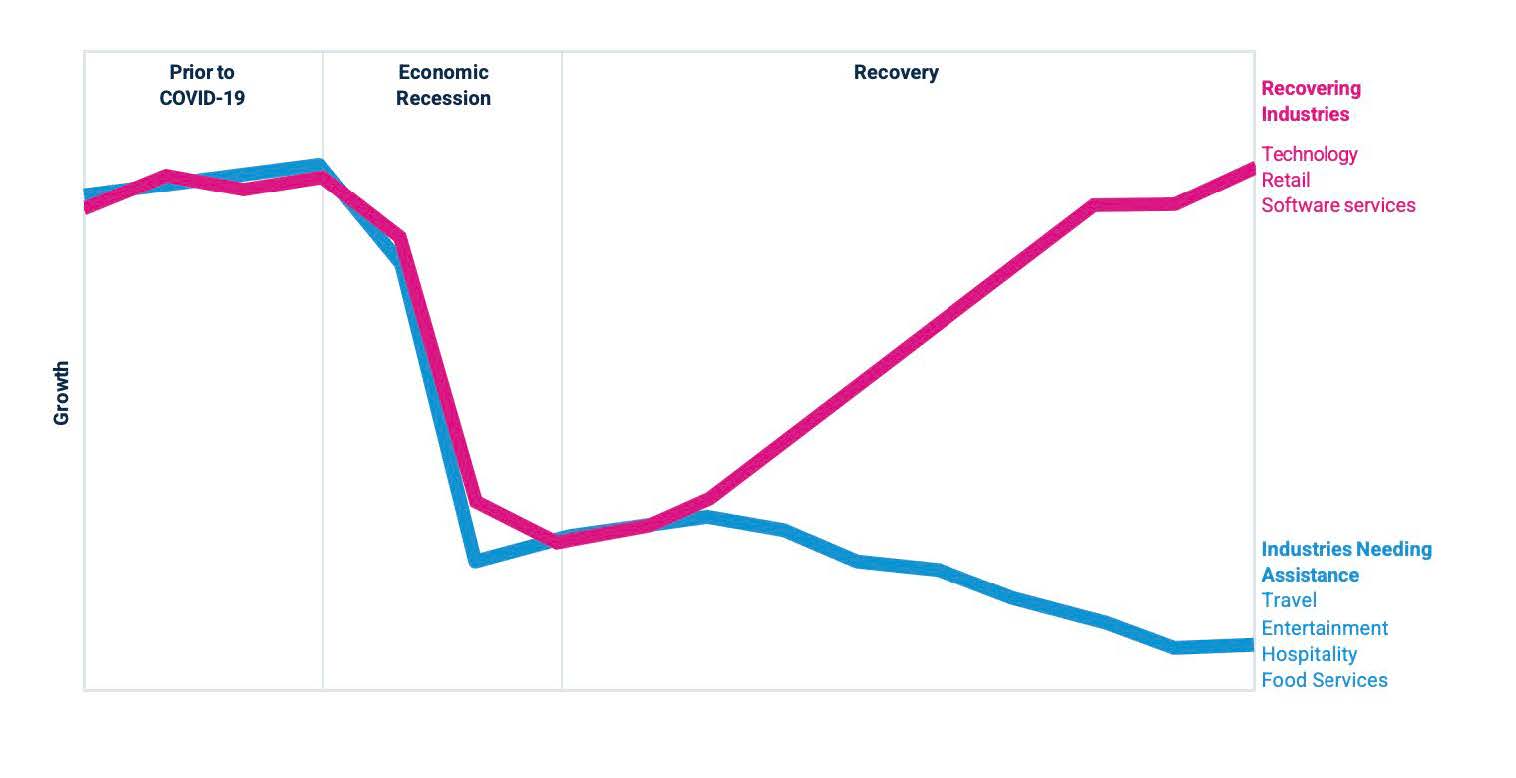
Today, the global economy (especially the U.S. economy) and equity markets appear to be a story of two tales with narrow growth drivers and an extreme concentration of equity returns. C WorldWide believes the real economy may be experiencing genuine demand, but it is narrowly centered on AI and sovereignty‑linked projects, not broad‑based private consumption and investments, as depicted in Figure 1. According to Rothschild and Redburn, spending on AI investments accounted for all the GDP growth in the U.S. in the first half of 2025.
AI‑related activities seem to power ahead on secular drivers while non‑AI activities appear to be weighed down by uncertainty, tariffs, lower immigration, and somewhat restrictive Fed rates. Per C WordWide, the gap between U.S. GDP growth and growth ex‑investment in IT equipment and software was a historically wide 140 bp in the 1H of 2025. This K‑shaped activity contributes to divergent consumption patterns where higher‑income consumers with exposure to AI‑related stock price gains remain strong, while lower‑middle‑income consumers experience weaker real labour income growth. As AI assets soar, those owners become disproportionate beneficiaries of stimulative monetary and fiscal policies, leading high‑income households to account for a disproportionate share of spending, making current private consumption reliant on the asset‑rich. The cost of living has risen approximately 30% since COVID, which has historically led to broad de‑premiumization and substitution to more affordable consumer products. On the other hand, affluent households continue to prioritise travel, healthcare, and leisure, while demand for autos, apparel, and durables remains weak. As a result, consumption is increasingly defined by the top 10%, while the rest of the economy trades down or cuts back.
Figure 1: K‑Shaped Recovery
Past performance is not indicative of future results. Source: U.S. Chamber of Commerce, October 2025
Within capital spending, hyperscaler data centers (AWS, Microsoft Azure, Google Cloud Platform) appear to be the dominant incremental growth engine, cascading into demand for electricity, switch gear, and construction, like building materials. This surge is amplified by FOMO (fear of missing out) among hyperscalers, each fearful of being left behind. According to McKinsey (April 2025), 60% of spending could go to chips and other hardware, 25% to power, electrical equipment, and cooling, and 15% to construction. Despite massive spending, monetisation remains limited, creating a capex supercycle without proven returns. Oppositely, general corporate willingness to invest in broad‑based capital investment has been depressed by the successive tariff rounds, increasing cost uncertainty, fears of retaliation risks, and the erosion of globalisation’s efficiency dividend.
Crosscurrents influence equity markets at all‑time highs with headwinds from tariffs and a slowing U.S. labour market, but tailwinds from expected Fed cuts and enthusiasm around AI. The “Magnificent Seven” continue to dominate, representing approximately 30% of the S&P 500 market cap and the vast majority of 2025’s return as of November 2025. Some of this market concentration is supported by earnings, as technology and communications are the current key drivers of market EPS growth. Industrials, staples, utilities, and real estate remain flat or negative. Just as household consumption relies on the affluent, equity markets are highly dependent on hyperscaler capex and the execution of the mega cap companies.
C WorldWide feels strongly that a key factor for the equity market outlook is the continued funding of the AI investments. In the short term, lower interest rates may help sentiment, and they see the beginning of vendor financing with Nvidia, investing in OpenAI. Vendor financing is, longer‑term, a red flag, and still needs a successful monetization of AI to secure a sustainable return on investments.
Investment Reflections on the Challenges of Narrow Markets
According to C WorldWide, the concentrated and narrow equity market, where short‑term nature dominates, has made it difficult for most long‑term active managers to outperform the benchmarks.
As the saying goes, “Financial markets are there to humble as many as possible.” In recent periods, this humility has been particularly difficult, and C WorldWide is acutely aware that despite the exceptional market conditions that they have not lived up to their clients’ relative performance expectations, especially in the past couple of years. Periods of underperformance are never easy, but they fuel their determination to reflect deeply and continue to learn and evolve.
Quality is the foundation of C WorldWide’s long‑term philosophy, and they define quality by three traits: a permanent right to win, a repeatable and durable business model, and industry dynamics that support sustainable growth. However, their ability to adapt to the new and changing circumstances is key to long‑term investment success. Therefore, they are continuously fine‑tuning and seeking to make thoughtful adjustments to their process while staying true to their long‑standing framework of core beliefs.
Managing Relative and Short‑Term Risks
C WorldWide’s risk objective has always been to manage portfolios with an absolute mindset, aiming to deliver strong long‑term returns while keeping volatility in line with the index. However, for the first time in decades, a handful of individual companies have now carried index weights larger than entire countries. This concentration creates new “tail risks” if left unaddressed. In response, C WorldWide seeks to embed relative risk assessments earlier into their investment research and apply their research process to those whose sheer market cap could influence relative outcomes.
They are maintaining their long‑term horizon, while at the same time more actively considering shorter‑term relative risks. In addition, they are sharpening their focus on companies that combine enduring quality with positive change — businesses where fundamentals are strengthening and the overall landscape is becoming more favourable.
C WorldWide’s DNA, their bedrock of beliefs, remains intact. High‑conviction stock‑picking with a longer‑term investment mindset remains their guiding principle.
A K‑Shaped Market Structure Could Also Create Opportunities
Five years ago, with negative real interest rates, long‑duration quality assets were in high demand and highly valued. In hindsight, the C WorldWide team underestimated the rise of interest rates, and while their companies delivered strong earnings growth, valuation pressures weighed on returns. Today, the picture has reversed with their high‑quality portfolio companies attractively priced compared to their history and continued positioned for sustainable growth — in their view, creating an attractive opportunity, when the narrow and K‑shaped equity market broadens out.
From a portfolio risk perspective, they think a stabilization of uncertainty could be positive, enabling equity market leadership to broaden out. Also, they see several important market trends that may turn in their favour, and they believe that there are many things that could go right going forward. They have bundled three key areas of investment convictions as follows:
Within IT and AI, C WorldWide thinks investors may broaden the current focus on training of LLMs (Language Learning Models) to wider, leading‑edge applications. They believe the sheer size of the AI investments creates significant execution risks, with returns on AI capex investments still unclear, and the leading AI infrastructure companies with high expectations embedded in their valuations. Wind of change could come to these one‑directional investment bets of the past two years. They foresee that semiconductor capex will broaden out, favouring more leading‑edge technology to the benefit of companies like ASML, TMSC, and Hoya. Competition between incumbent internet platforms like Microsoft, Google, and Amazon and new entrants like OpenAI may increase, although they expect the incumbent companies to be relative winners. They see the Chinese players as potentially well‑positioned to benefit from monetisation of the AI investments. Also, key data owners could benefit from monetisation as AI technology reaches practical usage.
Western banks, together with AI and defense, have been the star performers over the past 12 months. C WorldWide has a strong preference for emerging markets financials that are supported by rising penetration of financial services and a positive demographic backdrop, whereas they fear the value trade of Western banks may fade, especially as credit risks could re‑emerge. Also, asset‑light financials like exchanges and payment gatekeepers like Visa are long‑term well‑positioned.
Besides AI investments, they see several structural capital investments trends as countries need to upgrade industrial infrastructure to support increased defense production and the core industrial infrastructure, which is a prerequisite for a strong defense capacity. This includes upgrading of electrical infrastructure, investments to support reshoring, and automation. They also believe that solar and wind could be a part of these solutions.
Defense in a Multipolar World
C WorldWide believes the transition from a unipolar to a multipolar world order — exemplified by simultaneous conflicts in Ukraine and the Middle East — underscores the strategic imperative of abundant energy and large manufacturing capacities.
NATO’s commitment to 5% of GDP on defense, including 1.5% for critical infrastructure, may catalyse two investment super‑cycles: core defense spending growing at roughly 12% CAGR to 2030, and electrification markets expanding at 10–30% CAGR alongside the expansion of manufacturing capacities in the West.
Robust investment in power generation, transmission, distribution, and end‑user electrification could be indispensable to support advanced manufacturing. The multipolar contest may extend to industrial capacity: without energy, there may not be manufacturing — and without manufacturing, there may not be defense.
The conflicts in Ukraine and the Middle East per the C WorldWide team, are not isolated regional disputes but reflect the transition from a unipolar to a multipolar world order. These wars are not separate conflicts but strategic confrontations between China, Russia, Iran, and North Korea on one side and Western nations on the other, aimed at systematically challenging Western influence and the post‑World War II liberal order. Conflicts like those in Ukraine, Iran, and Yemen appear to be simply the most visible signs of this larger global struggle, featuring multiple pressure points intended to deplete Western military and economic resources.1
1 According to several reputable reports from July 2025, Chinese Foreign Minister Wang Yi told the EU’s top diplomat, Kaja Kallas, that Beijing “cannot allow Russia to lose the war in Ukraine.” Wang Yi explained that a Russian defeat would be strategically unacceptable for China because it might enable the United States to fully shift its focus toward containing China in East Asia.
The Coalition Against the West
The emerging axis of China, Russia, Iran, and North Korea represents a coordinated effort to challenge the post‑WW2 liberal order. This coalition appears to be forcing expensive military deployments across multiple geographies simultaneously, thereby depleting stockpiles of critical weapons and munitions and compelling the U.S. to stretch its resources thin instead of focusing on its main strategic adversary, China.
For example, recent Israeli strikes on Iran and Iran’s counteroffensive have significantly drained U.S. and allied missile supplies. The U.S. reportedly used up 14% of its global THAAD (Terminal High Altitude Area Defense) missile stockpile within just days of fighting. The U.S. has supplied about a third of its inventory of certain missiles (Javelin, Stinger, GMLRS) to Ukraine. Patriot interceptor supplies were reportedly down to 25% of the minimum needed levels. The reality for Europe is that the opponent is not only an aggressive Russia but also the emerging axis behind Russia with its industrial might. This happens at the exact time when the U.S. retrenches from the World Scene, or global landscape of events, cultural dynamics, and interactions among nations and communities, because of historical overreach. To face this challenge, Europe’s response may be both a rebuilding of defense capabilities and an overall overhaul of its societal economic structures. C WorldWide thinks Europe needs to realise that without abundant energy, there may not be any manufacturing, and without manufacturing, there may not be any defense.
Europe faces an unprecedented strategic challenge that transcends traditional “guns versus butter” economics. NATO’s 2025 Hague Summit required allies to lift defense spending to 5% of GDP, of which 1.5 percentage points is ring‑fenced for civil preparedness and critical infrastructure, not least energy grids.
C WorldWide has shared this insight which explores why traditional thinking fails to address the necessary structural changes for 21st‑century security. It explains why a 1.5 percentage point allocation is indispensable, how Europe’s energy policy and power networks currently fail, and what lessons China’s long‑term “electrostate” strategy offers.
Defense Companies Challenged by Indebted States and a Monopsony Market Structure
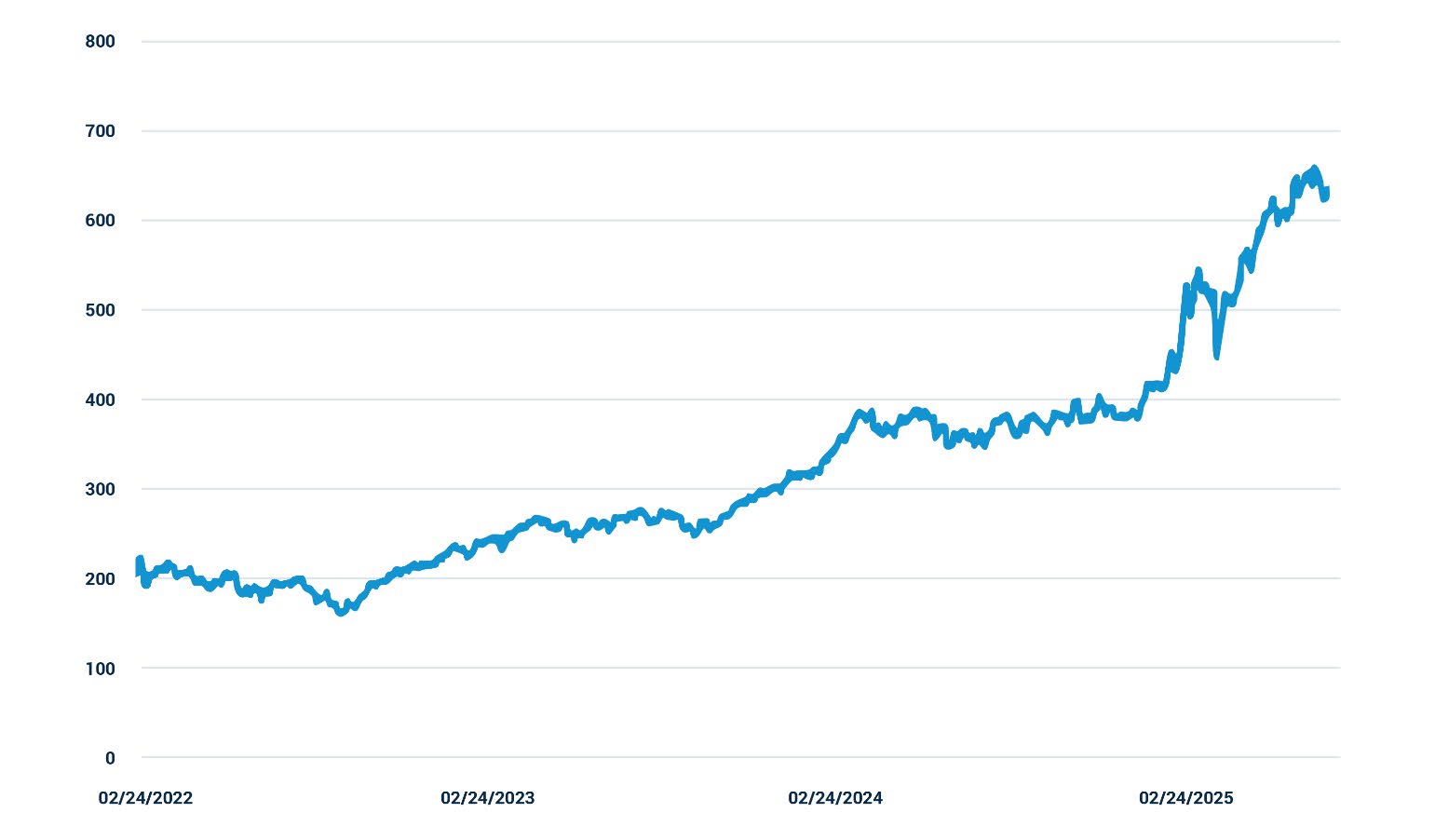
Since war erupted in Ukraine, C WorldWide has seen defense stocks perform strongly, see Figure 2. And no doubt, NATO’s increase in defense spending could lead to solid top‑line growth for well‑positioned companies over the next decade. However, the industry setup is a monopsony, with governments as the sole buyers. Coupled with political sensitivity, this restricts profit margins and returns on capital. While firms like Rheinmetall have benefited from favorable terms, those advantages may not last as attention shifts from initial excitement to upcoming debates about public finances and the sustainability of earnings growth for defense companies.
According to C WorldWide, the market anticipates significant margin expansion from companies like Rheinmetall, with defense EBIT margins projected in the 15–20% range, well above pre‑war levels of 8–10%. For comparison, U.S. peers such as Lockheed, Raytheon, and Northrop operate under stricter government oversight and have historically achieved 10–13% EBIT margins.2 Maintaining current levels may depend on political tolerance for large defense profits amid rising fiscal pressure points.
2 Behind paywall, September 2025
As C WorldWide explores below, modern warfare appears to be changing rapidly by the day. Drones and domes already play a more significant role, which could reshape industry structure and competitive dynamics. Many of the best‑positioned companies technologically are currently private, and while it’s important not to underestimate incumbent defense firms, it’s worth noting that many private companies appear to be better positioned for the “defense of the future”. This includes themes like drones, AI, and autonomous systems (Helsing, Quantum Systems, ARX Robotics) and missile systems (MBDA, Cambridge Aerospace), see Figure 2.
Figure 2: MSCI Europe Aerospace & Defense Index in USD
y‑axis indicates Growth; Past performance is not indicative of future results. Source: Bloomberg, September 9, 2025
From Narrow Thinking to Systems Thinking
Thinking narrowly about defense spending may cause investors to overlook the most crucial thematic investment opportunity created by this new multipolar world: the need for the West to refocus on energy and manufacturing to seek to regain relevance in the future.
The convergence of multiple crises — aging societies, fiscal constraints, technological disruption, and geopolitical challenges — could create systemic vulnerabilities that may not be addressed through conventional policy responses.
These correlated risks have historically exposed the fundamental weakness in Western defense industrial capacity. Ukraine’s daily consumption of 7,000 artillery shells, at least four times higher than Europe’s total production, along with Ukraine’s and Russia’s goal of producing 4 million drones annually, highlights the considerable gap between modern warfare demands and Western manufacturing capacity.
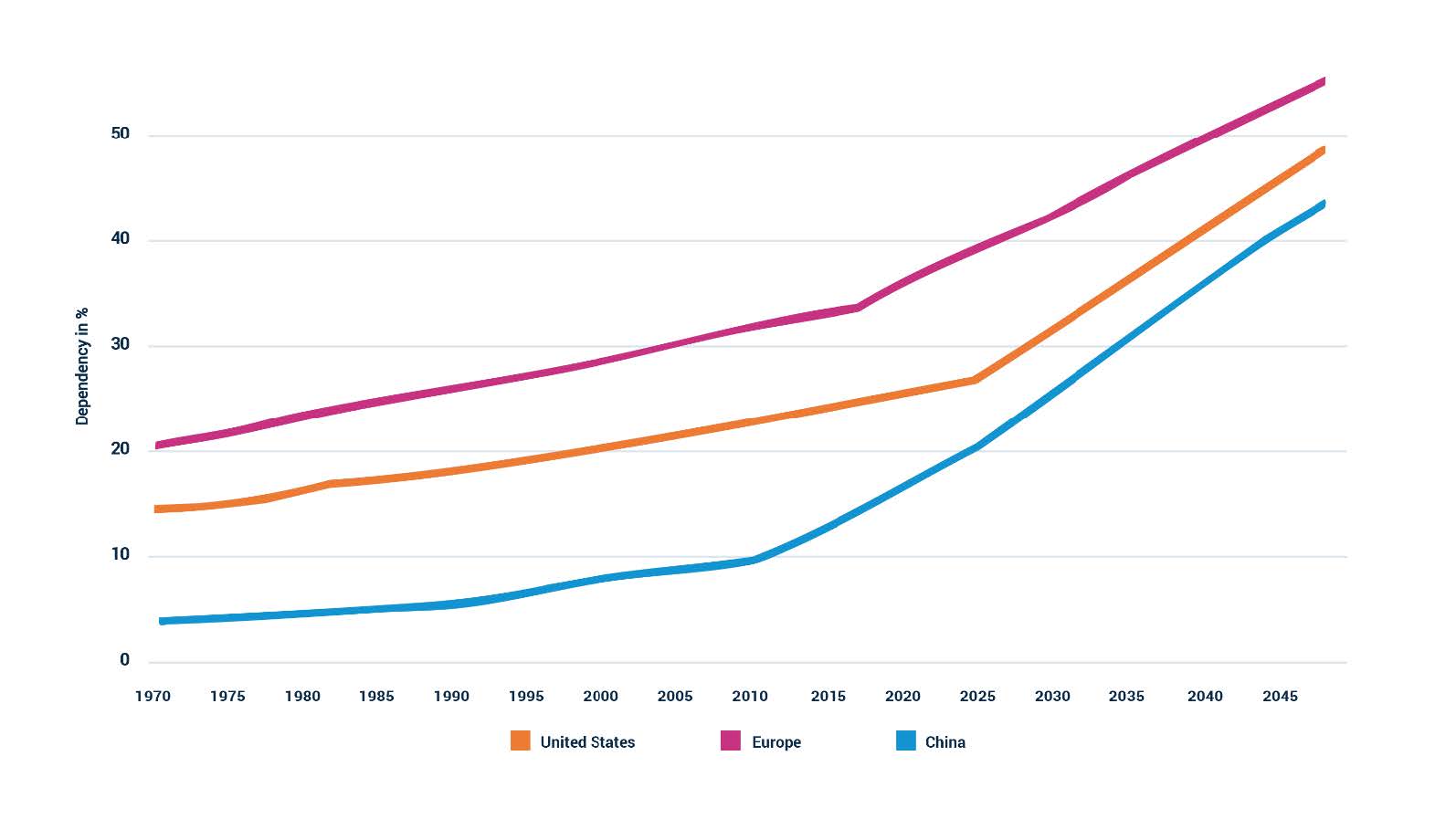
European demographics present a crisis that has historically made traditional fiscal models outdated. According to C WorldWide, by 2050, 22 out of 27 EU countries may face shrinking working‑age populations, while the old‑age dependency ratio in Europe may rise sharply, see Figure 3. The EU’s old‑age dependency ratio is expected to reach approximately 56.7% by 2050. This indicates there could be fewer than two working‑age adults (20–64) for every person aged 65 or older — more than doubling the ratio from 2001 levels and a significant increase from today’s roughly 34–35%.
Figure 3: The Old Age Dependency: U.S., Europe, and China
Source: Perplexity, September 2025
This creates a vicious cycle: fewer workers must support growing defense budgets and expanding elderly populations, while the tax base contracts precisely when fiscal demands rise. How will European politicians potentially maintain welfare states, dramatically increase defense spending, and avoid politically toxic tax increases?
Fiscal sustainability appears to be a prerequisite for a sustainable and strong military. If the fiscal house is not in order, it could undermine any nation’s ability to defend itself in the long term.
France serves as an example: As of July 2025, France’s defense budget was still only 2% of GDP. President Macron had previously announced plans to increase France’s defense budget by €6.5 billion over two years, to reach €64 billion by the end of 2027. However, this increase still falls short of the new NATO targets, as the annual military budget would need to reach approximately €100 billion to get to 3% of GDP by 2030. Ongoing political instability and upcoming government changes could further hinder France’s ability to fulfil these NATO spending commitments.
Modern Warfare and Private Sector Incentives
Modern warfare appears to have fundamentally shifted from the industrial paradigms that shaped Cold War thinking. For example, drones account for 60‑70% of kills and equipment damage in Ukraine.
This represents a manufacturing challenge fundamentally different from traditional weapons production. It requires consumer electronics supply chains, software integration, and rapid iteration cycles that favour software‑driven production systems over legacy defense contractors. These consumer electronics supply chains are mainly located in China. China has restricted the export of electronic components, especially drone parts, to Ukraine (as well as to the U.S. and broader Western markets). These controls cover finished drones and critical components such as motors, batteries, cameras, flight controllers, and navigation units. Meanwhile, Chinese exports of these materials to Russia have continued.3
3 Perplexity.ai, September 2025
Traditional defense procurement — designed for decade‑long development cycles and specialised production facilities — may not be able to adapt to the pace of technological change driving modern conflict. The natural conclusion is that a traditional focus on defense alone, financed by an almost bankrupt public sector, may not be able to solve the task itself, and massive investments by private enterprise are required if Europe wants to tip the scales of geopolitics in its favour.
This requires incentives. According to C WorldWide, EU bureaucracy has stifled European entrepreneurship and needs to be changed. Lowering capital taxes should encourage risk‑taking more. Otherwise, capital may not to the degree needed support the upgrade of European manufacturing and electrification, which is essential for a stronger European defense system.
Modern Infrastructure and China’s Electrostate
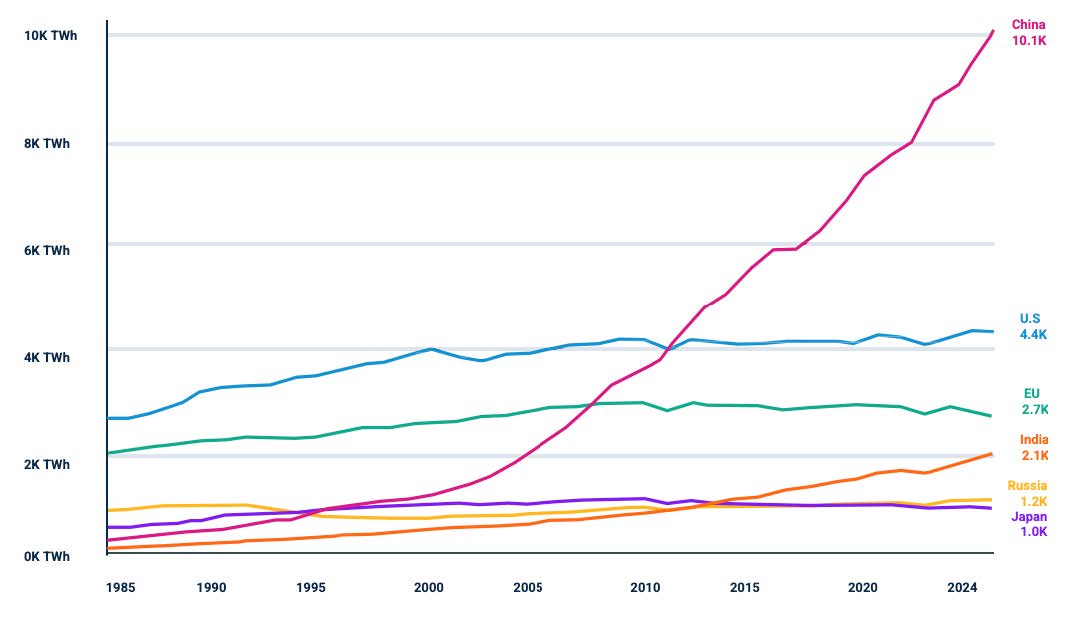
C WorldWide believes China’s strategic advantage lies not only in its current military capabilities but also in its massive industrial capacity and its systematic electrification of its economy. While the West focused on financialisation and services, China built the world’s first “electrostate” — with electricity comprising 28% of total energy use compared to the global average of 20%. Today, China consumes as much electricity as the EU, the U.S., India, and Russia combined, see Figure 4.
Figure 4: Top Power Producing Countries
y‑axis represents power; Source: Our World in Data, September 2025
China’s electrification strategy aims to reduce its vulnerability to imported energy, particularly oil shipped from the Middle East — a logistical choke point that the U.S. could potentially block in a crisis.
Recognising this risk, China decades ago embarked on a large‑scale transition to substitute domestically sourced energy for imported fossil fuels. Europe has done precisely the opposite over the last few decades, shutting down domestic fossil and nuclear production, while low‑density renewables4 have historically been ineffective in covering for the shortfall of legacy production. So, while China’s import dependency on energy has been halved from 26% to 13% between 2000–2024, Europe has over the same time seen a moderate increase in import dependence to 58%, see Figure 5. This huge strategic vulnerability may take decades to correct, but it also opens up very large investment opportunities.
4 The‑struggle‑to‑achieve‑net‑zero‑emissions, C WorldWide, 2025
China leads the world in new installations of coal, nuclear, hydro, wind, and solar power and has historically made significant investments in grid modernisation and the electrification of transport and industry. This push for electrification allows the country to supply more of its economy with domestic energy sources and has supported manufacturing dominance across critical technologies. Europe needs to copy this to rebuild resilience.
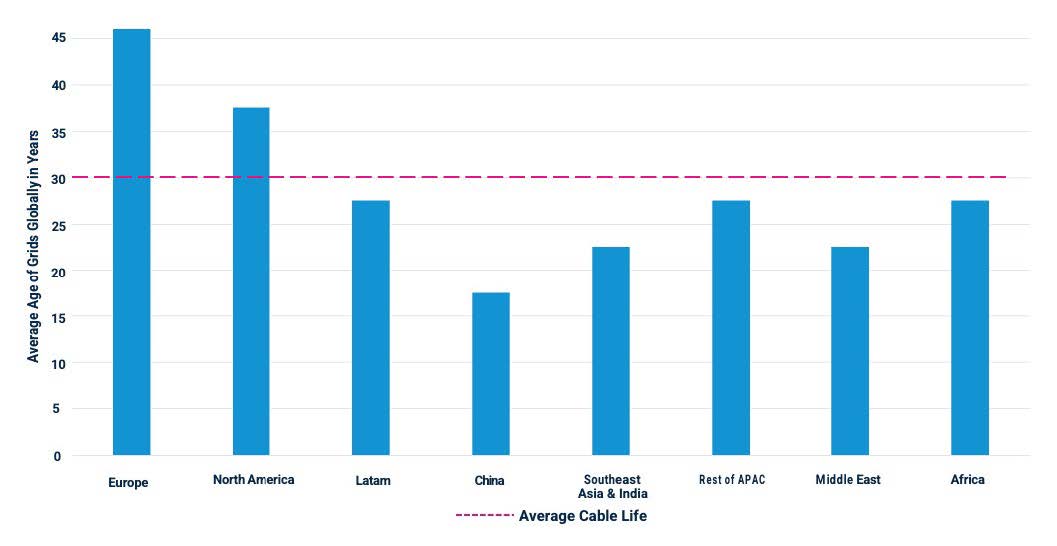
Figure 5: Grids in Europe and North America are Older Than the Average Cable Life
Source: Bernstein, June 2025
China’s 42 ultra‑high‑voltage (UHV) transmission lines — each capable of carrying 5–12 GW over 2,000+ kilometres with minimal losses — represent more than energy infrastructure. They constitute a manufacturing advantage that enables the rapid addition of power generation and industrial production scaling anywhere within China’s territory.
Europe’s and America’s old grids, constrained by conventional high‑voltage systems limited to 1–3 GW capacity over shorter distances may not support the industrial loads required for modern manufacturing on Chinese scales. This infrastructural gap translates directly into limitations in manufacturing. The current scramble to get power connections for AI data centres in Europe and the U.S. is a case in point.
China’s transportation electrification strategy demonstrates the most visible aspect of its energy independence drive. The country now produces over 60% of all electric vehicles globally, accounting for more than half of global EV sales. This dominance extends beyond manufacturing to the entire EV ecosystem, creating a self‑reinforcing cycle of energy independence and powerful competitive moats in multiple industries.
According to C WorldWide, China’s high‑speed rail (HSR) network, covering over 45,000 kilometres and representing two‑thirds of the world’s high‑speed rail capacity, operates entirely on electricity, seeking to reduce dependence on imported petroleum products for mobility. The strategic complementarity between China’s high‑speed rail network, rising EV demand, decreasing air transportation demand, and lowered energy import dependency demonstrates sophisticated long‑term policy planning. HSR lessens the need for long‑distance travel by car and air transportation. Although China’s population is four times larger than the U.S., domestic air travel levels are similar.
China’s oil demand contracted 0.6% in 2024 while electricity consumption grew 6.7%.
China’s dominance in electric vehicles (EVs) and battery technology may have significant implications for other fast‑growing fields such as drones and humanoid robots. The technological advancements, cost reductions, and established supply chains for EVs — especially lithium‑ion batteries, electric motors, controllers, and related electronics — are the foundational components that drive cutting‑edge robotics and autonomous systems.
China now appears to control a large portion of the supply chains for essential technologies used in drones and humanoid robots, as well as key raw materials. This makes Western efforts to develop or expand autonomous systems highly reliant on Chinese suppliers. In practical terms, anyone in the West working on advanced drones or robots may need Chinese‑made batteries, sensors, or power electronics — or face higher costs and limited capabilities if they attempt to get supplies from non‑Chinese sources.
Furthermore, as autonomous systems become a larger part of modern defense technology, blurring the lines between consumer electronics and military applications, China’s firm control of these “dual‑use” supply chains could become a strategic issue. Efforts in the U.S. to slow the growth of EV technology, such as the hostility shown by the Trump administration,5 risk weakening the broader American ability to compete in autonomous systems and robotics, both commercially and militarily. In short, without a strong domestic EV and battery industry, the U.S. and its allies may face long‑term dependence on China for the next stage of defense innovation.
5 Exclusive: Trump transition team plans sweeping rollback of Biden EV, emissions policies | Reuters, 2025
European Governments should understand that spending more on conventional defense procurement may not generate competitive military capabilities if the underlying industrial ecosystem cannot deliver modern systems at scale and speed.
The Ukrainian conflict demonstrates this. Commercial drones adapted for military use, produced in consumer electronics factories, have historically proven more tactically relevant than expensive traditional systems designed in the 1990s. Rather than simply increasing defense spending percentages, Western governments must acknowledge that security in the 21st century requires manufacturing competitiveness across electrified industrial systems.
This includes likely diversifying supply chains away from potential adversaries and building technological sovereignty in critical sectors while managing the fiscal constraints imposed by ageing societies and debt burdens.
C WorldWide believes the West faces a strategic challenge that goes beyond traditional fiscal policy debates and enters the realm of system transformation. China’s systematic electrification over three decades has historically created geopolitical advantages that may not be overcome through increased defense spending alone.
Broader Investment Opportunities
According to C WorldWide’s sources, EU NATO members spent €327 billion, or approximately 1.9% of GDP, on defense in 2024. Assuming 3% nominal growth of GDP and 3.5% spending on defense by 2035, this translates into total defense spending of EUR 830 billion or a CAGR of 9%.
The 1.5% allocation to broader defense‑related areas could lead to a new stream of investment opportunities, an area they think the market does not discount today. This portion is dedicated to defense‑related infrastructure, resilience of energy grids, distribution networks, critical infrastructure protection (including cybersecurity), and military mobility corridors.
Europe, like the U.S., has had old transmission and distribution networks, see Figure 5. C WorldWide believes these networks have become the main bottleneck for increasing renewable capacities in Europe. Additionally, modern defense relies heavily on energy, especially electricity. From data‑driven command systems to energy‑hungry AI data centers, military effectiveness today could depend on reliable and cyber‑secure power. Recognising this, NATO now requires 1.5% explicitly allocated to civil preparedness and critical infrastructure, including energy grids. According to Bernstein, spending on power grids in the four major European countries has increased by about 80% over the past five years. Europe spends roughly €63 billion on power grids annually, with around €28 billion for electricity transmission and €35 billion for distribution. Before the new 1.5% allocation, Bernstein expected this to more than double by 2030.
The April 2025 Iberian blackout demonstrated how high renewable penetration without robust grids can lead to blackouts. The 2023 EU Action Plan for Grids and the upcoming European Grids Package aim to streamline permitting, encourage proactive investment, and fund €584 billion in upgrades this decade. In September 2025, Goldman Sachs6 analysed the longer‑term supply‑demand outlook for European electricity markets and concluded that the Regulated Asset Base (RAB) of grid companies will compound at 15% for the foreseeable future. This may benefit regulated utilities like SSE Energy Solutions, E.ON, and the Iberdrola Group.
6 Goldman Sachs Research – Marquee, 2025
However, electrification offers compelling investment opportunities across many different sectors. In Power Generation, renewable sources attract the most investment. An increasing recognition that renewables alone cannot ensure stable and affordable electricity will boost demand for gas generation and the deployment of nuclear power in the long term. Transmission and distribution infrastructure are expected to expand significantly, benefiting market leaders such as ABB, Siemens Energy, and Schneider Electric, which dominate transformer and grid infrastructure markets, as well as leading global cable companies Nexans, Prysmian, and NKT. These companies could provide comprehensive solutions ranging from high‑voltage transmission to distribution automation systems.
Siemens Smart Infrastructure focuses on the “grid edge” — where electricity connects with end users in buildings and industrial facilities. Siemens is a major player in low‑voltage switch gear and is also active in high‑growth sectors like data centers and energy storage.
Likewise, Schneider Electric is also a key player in data centers. The company furthermore focuses on energy management and the digital transformation of electrical infrastructure. As manufacturing expands in Europe, the industrial electrical equipment sector, working with building automation, factory electrification, and smart grid integration, may experience growth.
Total power investments could rise to €3,000 billion over the coming decade to cope with historical underinvestment and expected growth in demand.
This may lead to the conclusion that Europe’s new defense focus leads to two simultaneous investment “super‑cycles.” Core defense procurement must more than double, increasing at roughly 12% CAGR to 2030, while spending on electricity infrastructure, storage, mobility, cyber security, and power electronics appear to be expanding at 10–30% CAGR, depending on the segment. Figure 6 shows that electrification markets could outpace this historic re‑armament, opening total addressable markets (TAMs) measured in the trillions and offering equity investors broader, faster‑growing runways than traditional defense primes.
Figure 6: Total Addressable Markets (bn EUR)
Source: C WorldWide, Bernstein, Redburn Atlantic, September 2025
Conclusion
C WorldWide believes Europe’s pledge to spend 5% of GDP on security is historic. Europe’s transition from austerity‑driven policies to infrastructure and defense‑led growth represents a fundamental paradigm shift with profound implications for economic performance and equity markets. The combination of substantial fiscal multipliers, strategic industrial transformation, and attractive valuations positions European markets to potentially rival U.S. returns for the first time since the 2000s.
The cyclical benefits of this spending transformation, supported by fiscal multipliers and the structural advantages of strategic autonomy and technological spillovers, may be reasons to believe that Europe is entering a new era of growth potential. Per C WorldWide, utilities and electrical capital goods companies along with cable and transformer vendors appear to be well‑positioned to deliver compelling returns with growth matching defense majors. As this investment cycle matures and European industrial capacity expands, the region’s equity markets appear well‑positioned to capitalise on this transformation, while supporting the continent’s long‑term economic competitiveness and security independence.
Important Information
This information has been provided by C WorldWide and was published in November 2025 for informational purposes only. The opinions expressed are as of November 2025 and are subject to change. The opinions expressed by the speakers do not necessarily represent the views of Harbor Capital Advisors, Inc. The information and opinions contained in this material are derived from proprietary and non‑proprietary sources deemed by Harbor Capital Advisors, Inc. to be reliable and are not necessarily all‑inclusive and are not guaranteed as to accuracy. Harbor nor C WorldWide has not considered any reader’s financial situation, objective or needs in providing the relevant information.
Performance data shown represents past performance and is not indicative of future results.
Investing entails risks, and there can be no assurance that any investment will achieve profits or avoid incurring losses.
International investing involves risks, including risks related to foreign currency, limited liquidity, less government regulation, and the possibility of substantial volatility due to adverse political, economic, or other developments. These risks are often heightened for investments in emerging/developing markets or in concentrations of single countries. Stock markets are volatile, and equity values can decline significantly in response to adverse issuer, political, regulatory, market, and economic conditions.
The views expressed herein may not be reflective of current opinions, are subject to change without prior notice, and should not be considered investment advice or a recommendation to purchase a particular security.
This material may contain forward‑looking information that is not purely historical in nature. Such information may include, among other things, projections and forecasts. There is no guarantee that any of these views will come to pass.
Copyright © 2025 Harbor Capital Advisors, Inc. All Rights Reserved.