


Osmosis has been in a strategic partnership with Harbor for almost a year. Osmosis continues to publish thought leadership on several relevant topics, including this piece focusing on resource efficiency and the telecommunications sector. As of this writing, Tim S.A.(TIM) is one of the largest distributors of mobile and fixed telephone services. Similarly, AT&T Inc. (AT&T) is the largest provider of both local and long‑distance fixed telephone services and Internet access in the U.S. Harbor is pleased to share Osmosis’s thinking for your portfolio construction consideration
Key Takeaways
- Telecommunication firms operating within cleaner energy grids and actively engaging in the self-generation of renewable energy have historically tended to exhibit significantly greater carbon efficiency relative to their peers.
- The transition from company-operated data centers to cloud-based infrastructure could represent a critical lever for enhancing energy and resource efficiency, particularly in reducing carbon and water intensity.
- Firms that implement comprehensive waste reduction strategies, emphasizing recycling, reuse, and landfill diversion, appear to be emerging as leaders in the sector.
- This case study compares the environmental performance of TIM and AT&T, focusing on their respective approaches to decarbonization, water use, and waste management.
Industry Context: Sustainability in the Telecom Sector
The telecommunications (telecom) sector has been a vital enabler of global digital infrastructure but appears to face growing scrutiny over its environmental impact. According to Osmosis research as of September 2025, it is responsible for approximately 1.5% to 4% of global greenhouse gas emissions, and accounts for over 4% of electricity use, largely driven by network operations and data centers.
These environmental pressures are intensifying due to rising data demand, continued infrastructure expansion in emerging markets (EM), and the slow adoption of renewable energy across the sector. Sustaining base stations, mobile and fixed networks, and cooling systems may require continuous energy input, which has contributed significantly to the sector’s emissions profile.
As global connectivity continues to grow, particularly in developing regions, efficiency in carbon, water, and waste appear to be an increasing critical measure of both environmental and operational performance.
Key Insight: As digital infrastructure expands, energy and emissions management have the potential to be central to long‑term resilience in the telecom sector.
Carbon Intensity: Renewable Energy and Emission Reduction
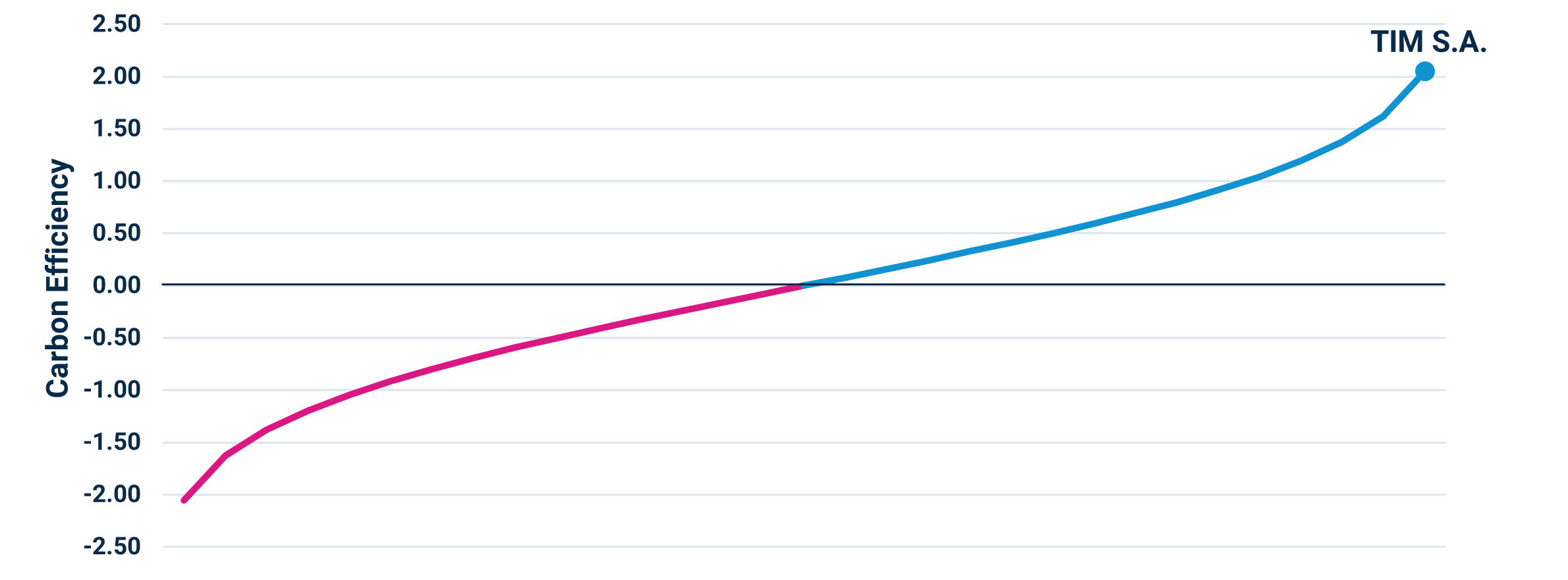
Carbon Efficiency in the Emerging Markets (EM) Telecommunications Sector
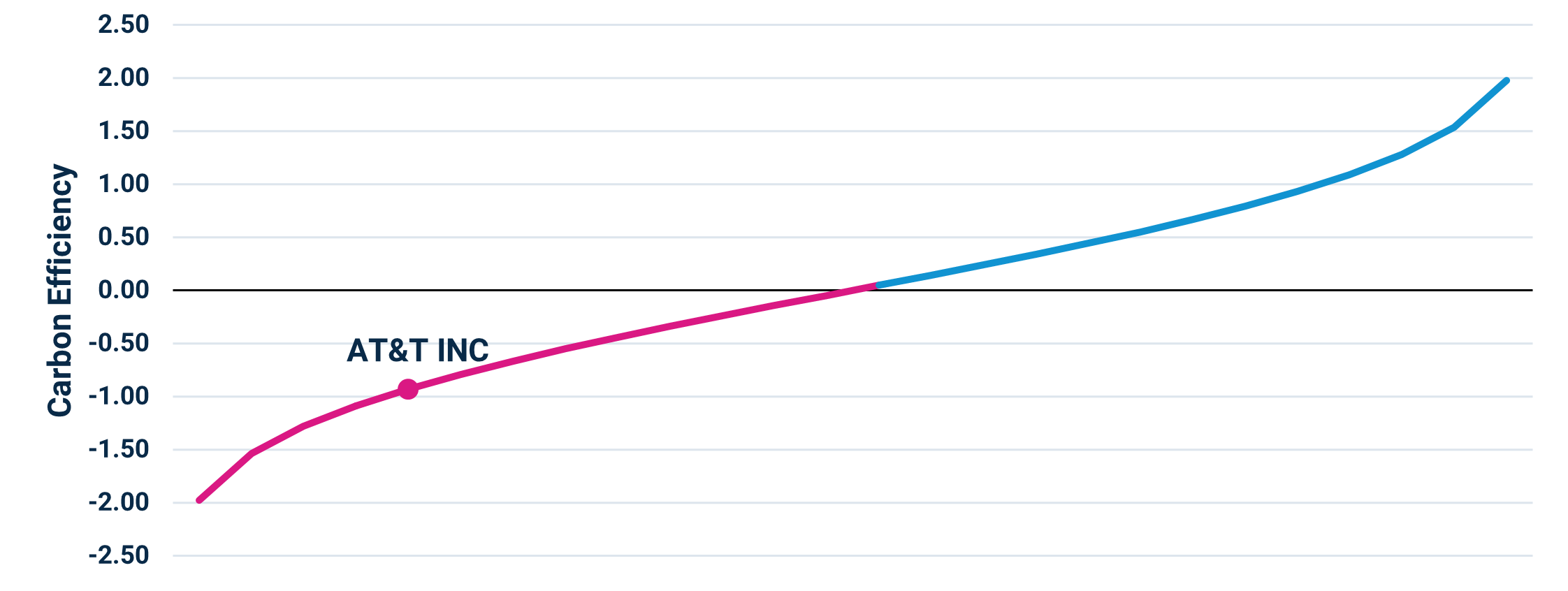
Carbon Efficiency in the Developed Markets (DM) Telecommunications Sector
Past performance is not indicative of future results. Source: Osmosis IM, December 2024.
TIM: A Sustainability‑Centric Leadership Model
TIM, a Brazilian telecommunications provider, has used 100% renewable electricity across its operations since 2021. Over 60% is sourced from 129 distributed generation units, including solar, hydro, and biogas. This model has historically reduced reliance on the national grid and supported Brazil’s clean energy transition.
TIM has appeared on the B3 Corporate Sustainability Index (ISE) for 17 consecutive years, the longest‑standing telecom firm in that index. The ISE highlights companies with strong Environmental Social Governance (ESG) performance through a multi‑step process involving scoring and exclusion filters.
Scope 1 emissions come from diesel generators, distributed units powered by biogas or natural gas, and TIM’s vehicle fleet. Scope 2 emissions, from purchased electricity, are addressed through a combination of International Renewable Energy Certificates (I‑RECs) and the company’s own generation capacity.
A regulatory change in 2012 allowed distributed energy to feed into Brazil’s grid, enabling TIM to scale its infrastructure. The company is a signatory of the Science Based Targets initiative (SBTi) and has committed to net‑zero emissions by 2040, with a 42% reduction in Scope 3 emissions by 2030.
AT&T: Incremental Progress, Lagging Transparency
Currently AT&T, a major North American telecom operator, emits 17 times more carbon per unit than TIM. In 2023, Scope 1 emissions made up 4.2% of its total, predominantly from vehicles, refrigerants, and cooling systems. Scope 2 emissions, from electricity and steam, accounted for 23.5%. The remaining and most significant portion of emissions has been attributed to Scope 3 emissions, or a category of greenhouse gas (GHG) emissions originating from business operations by sources that aren’t directly owned or controlled by an organization.
Despite initiatives seeking to improve energy efficiency and expand renewables, only 17% of AT&T’s operational energy comes from renewable sources. Most appears to be secured through virtual power purchase agreements and I‑RECs linked to wind and solar. While the company has expressed interest in developing its own infrastructure, progress has been limited.
Around absolute carbon emissions, as of September 2025, AT&T does not report sector‑specific efficiency metrics such as emissions per terabit or network eco‑efficiency. TIM includes these indicators, reflecting a more advanced and transparent approach.
Key Insight: TIM has demonstrated significantly lower emissions and greater carbon efficiency than AT&T, highlighting the value of decentralized infrastructure, transparency, and firm emissions targets in driving environmental performance.
Water Intensity: A Journey to Cloud
Water management has traditionally been a secondary concern in the telecommunications sector. However, it may be becoming increasingly important due to the high water demand required for cooling data centers, which seem to be critical to maintaining stable network operations.
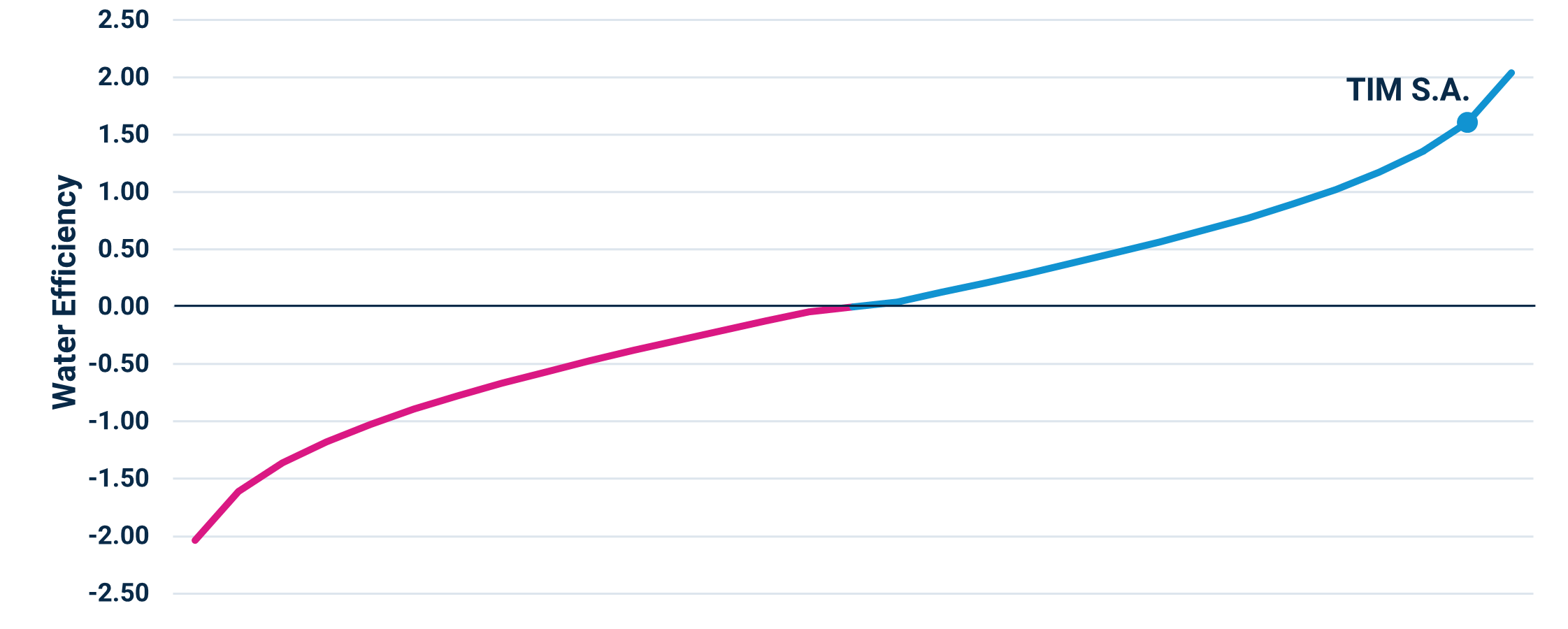
Water Efficiency in the EM Telecommunications Sector
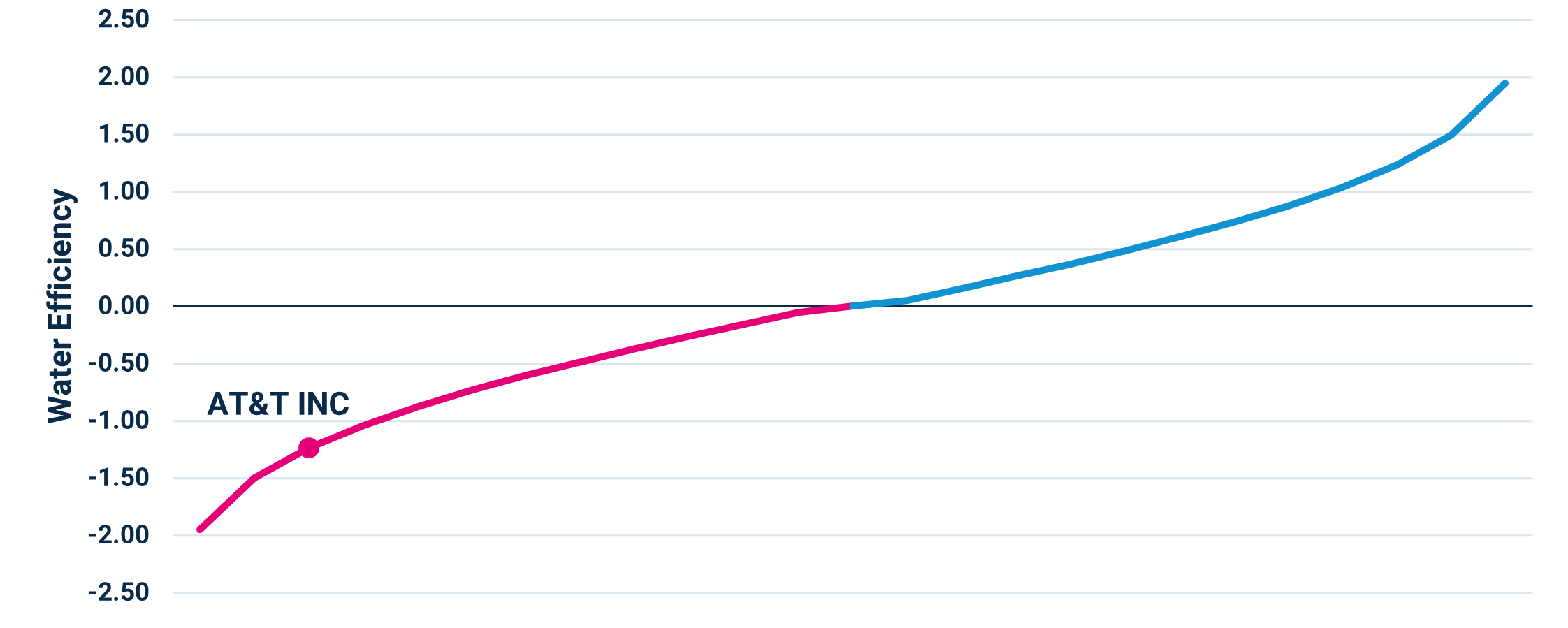
Water Efficiency in the DM Telecommunications Sector
Past performance is not indicative of future results. Source: Osmosis IM, December 2024.
TIM: Seeking to Reduce Water Through Cloud Transition
TIM began a multi‑cloud migration in 2023 and fully decommissioned its physical data centers in Rio de Janeiro and São Paulo. These had previously accounted for more than half of its total water use. By 2024, total water consumption dropped to 52,000 cubic meters, a 3.7% year‑over‑year reduction. All withdrawals were from municipal sources.
AT&T: Data Center Reduction Without Matching Impact
AT&T reported water use of 8.27 million cubic meters in 2023, with 99% drawn from municipal systems and 1% from on‑site wells. The company began consolidating its data centers in 2020 and closed 10 of 34 sites by 2022, reducing costs by 30%. However, most water use remains tied to cooling infrastructure, and efficiency improvements have been limited.
Key Insight: TIM’s strategic shift to cloud infrastructure has delivered measurable reductions in water use, while AT&T’s partial consolidation has yet to produce comparable efficiency gains.
Waste Intensity: Advancing Efficiency Through Circular Practices
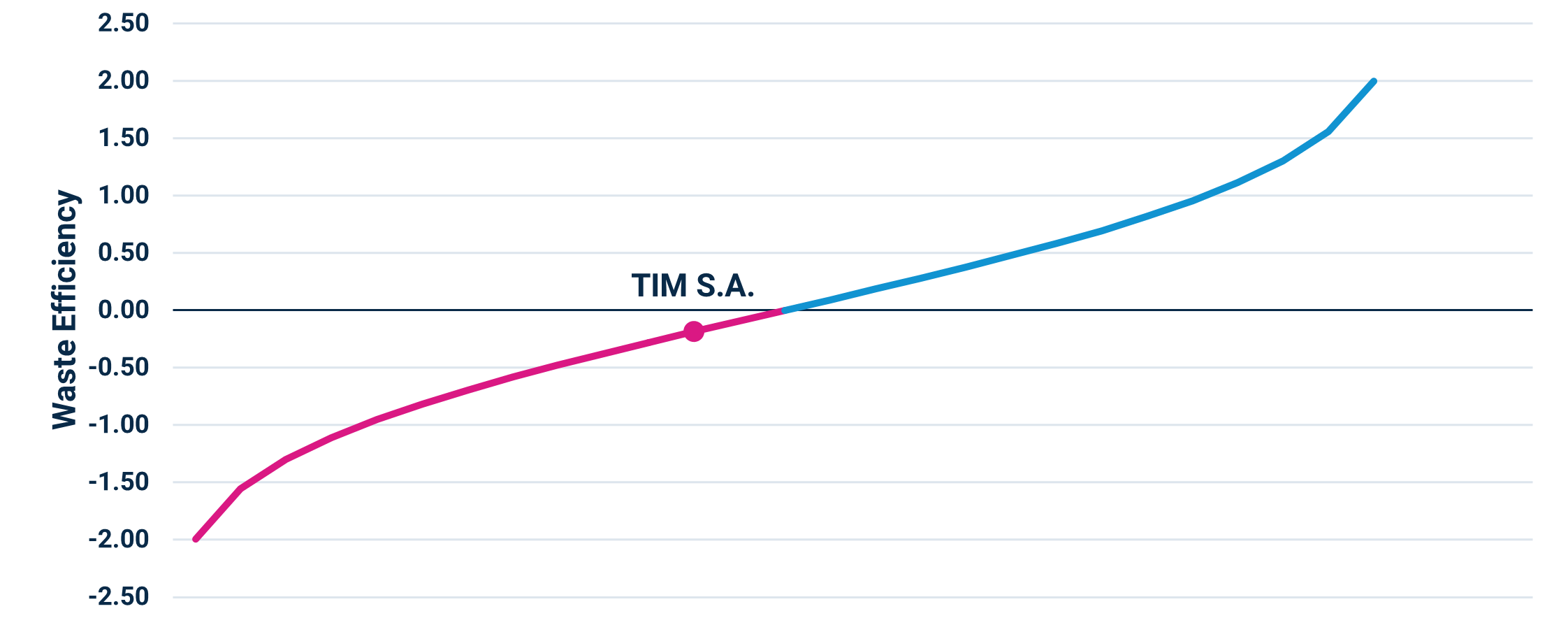
Waste Efficiency in the EM Telecommunications Sector
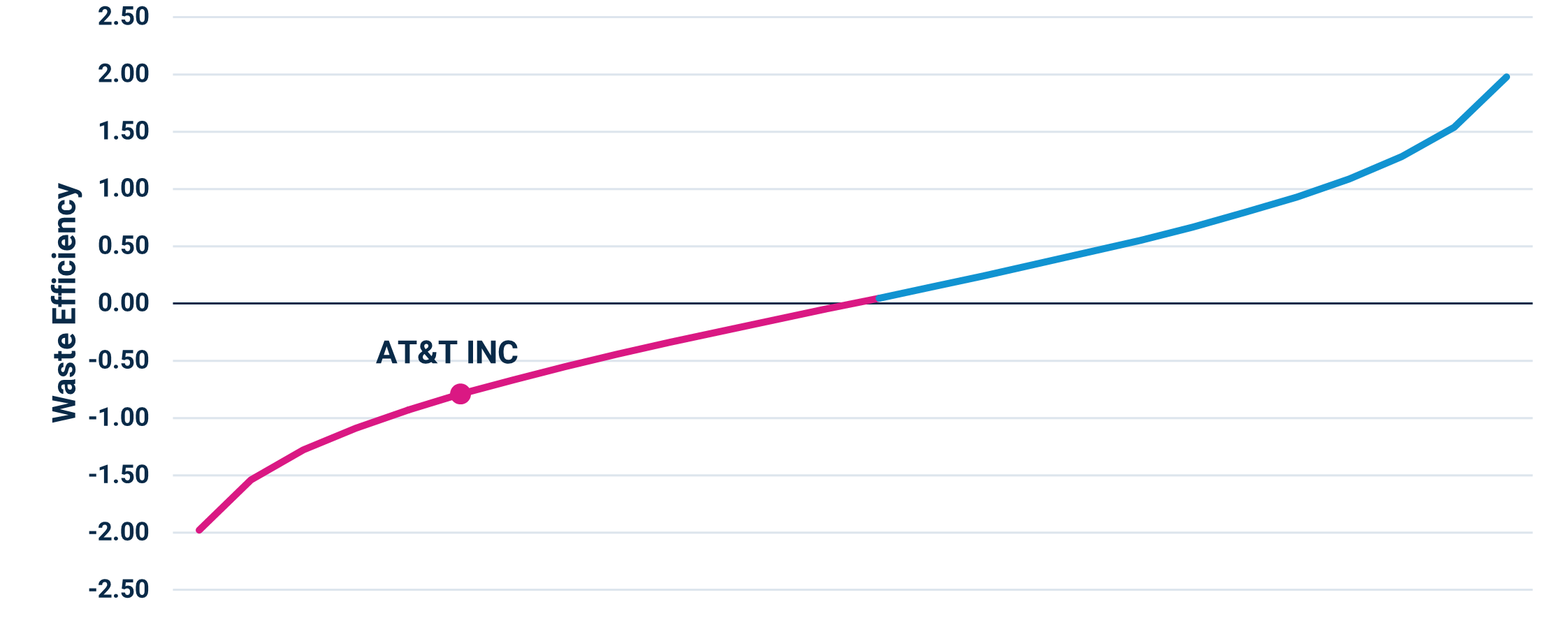
Waste Efficiency in the DM Telecommunications Sector
Past performance is not indicative of future results. Source: Osmosis IM, December 2024.
TIM: Sector Leadership in Waste Diversion
TIM has implemented a comprehensive waste management strategy focused on recycling, reuse, and landfill diversion. In 2024, this strategy generated 2,467 tons of solid waste, 95% of which was reused or recycled. Its “Zero Waste to Landfill” initiative diverted an additional 14.6 tons from disposal.
The company also addresses post‑consumer waste. In partnership with ABREE, a non‑profit managing electronics disposal in Brazil, TIM operates over 300 collection points for phones, batteries, and accessories. In 2024, it processed 3,560 kilograms of this waste, all routed to certified recyclers with final destination verification.
TIM exceeded its 2025 operational waste target one year early, achieving a 99.9% reuse and recycling rate. Although it leads in circularity, other emerging market peers such as Etisalat are advancing upstream approaches to reduce waste generation.
AT&T: High Waste Volumes Despite Incremental Progress
AT&T generated 126,771 tons of landfill waste and recovered 47,231 tons in 2024. Its waste streams include hazardous materials such as batteries and compressed gases, and non‑hazardous components like e‑waste, plastics, and packaging.
The company aims to cut landfill waste from its U.S. operations by 30% by 2030, compared to a 2019 baseline. It is pursuing various initiatives, including local sourcing of waste vendors, improved tracking, and sector partnerships.
Key Insight: TIM’s circular model and early target achievement has demonstrated strong waste management performance, while AT&T’s high volumes and limited reduction progress highlight the need for greater upstream action.
Conclusion: Action Over Intent
TIM has embedded environmental efficiency across its operations, and Osmosis believes continues to demonstrate strong performance in emissions reduction, water use, and waste management. Its decentralized energy model, cloud migration, and circular waste practices have delivered clear, measurable outcomes.
By contrast, AT&T has set commitments and articulated environmental goals, but the impact of these targets has yet to translate into material reductions. High emissions, water consumption, and waste volumes remain, underscoring the gap between stated intent and demonstrated action.
For Osmosis, this distinction is central. Resource efficiency is not judged by ambitions or targets, but by observable outcomes. Osmosis believes that companies that have consistently showed measurable improvements in carbon, water, and waste intensity tend to exhibit stronger long‑term resilience and profitability. Additionally, they think TIM’s consistent delivery across environmental metrics reflects a more advanced and effective sustainability strategy.
Important Information
Investing entails risks and there can be no assurance that any investment will achieve profits or avoid incurring losses
This material may contain forward‑looking information that is not purely historical in nature. Such information may include, among other things, projections and forecasts. There is no guarantee that any of these views will come to pass.
This information has been provided by Osmosis as of September 2025 and is for informational purposes only. It does not constitute or form part of any offer to issue or sell, or any solicitation of any offer to subscribe or to purchase, shares, units or other interests in investments that may be referred to herein and must not be construed as investment or financial product advice. Harbor nor Osmosis has not considered any reader’s financial situation, objective or needs in providing the relevant information.
The views expressed herein may not be reflective of current opinions, are subject to change without prior notice. This material does not constitute investment advice and should not be viewed as a current or past recommendation or a solicitation of an offer to buy or sell any securities or to adopt any investment strategy.
Copyright © (2025) Harbor Capital Advisors, Inc. All Rights Reserved.
4826349